
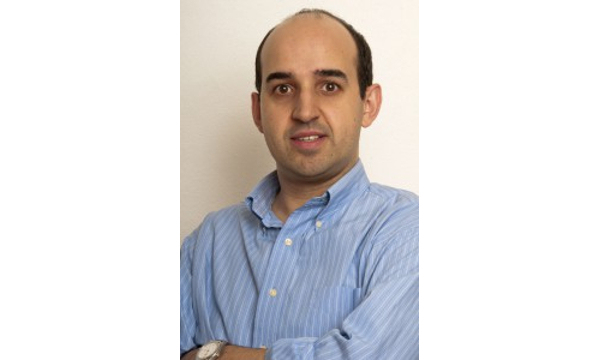
DUARTE BARRAL
CEDOC NOVA
Seminar: Subversion of actin cytoskeleton remodeling and cell adhesion regulation by breast cancer cells
Host: Jaime Mota
Abstract
Breast cancer is the most common type of tumor among women worldwide and about 80% of breast tumors diagnosed are invasive ductal carcinomas (IDC). Despite the decline in mortality from breast cancer in developed countries in recent years, approximately one third of breast cancer patients die from metastases. Therefore, the development of therapies to impair metastasis is essential to reduce breast cancer mortality. The early stages of breast cancer consist in non-invasive lesions, such as ductal carcinomas in situ (DCIS), from which 30-50% of cases progress to invasive carcinomas. Therefore, the events involved in the transition from DCIS to IDC are crucial in the progression to aggressive tumors. Emerging evidence indicates that membrane traffic is subverted by cancer cells to acquire an invasive capacity. Indeed, the Ras superfamily of GTP-binding proteins, which regulate all steps of membrane traffic, control cell migration, invasion and their expression is modulated in several types of cancer, including breast cancer.
Our studies show that the Arf family protein Arl13b has an essential role in breast cancer cell migration and invasion, as well as tumor progression. Indeed, we observed that Arl13b expression is upregulated in breast cancer cell lines and patient tissue samples. Moreover, we found that Arl13b localizes to focal adhesions (FAs) and interacts with b3-integrin. Upon Arl13b silencing, b3-integrin cell surface levels are increased, as well as FA size. Also, the decreased levels of Y118-phosphorylated Paxillin suggest that FA stability is enhanced. Therefore, our studies provide a new mechanism for Arl13b function as an oncogene, through the regulation of focal adhesion turnover and suggest that Arl13b is an essential driver in the transition from in situ to invasive breast carcinomas.
Short bio
Duarte Barral graduated in Microbiology and Genetics from the Faculty of Sciences of the University of Lisbon and obtained his PhD in Cell Biology from Imperial College London, University of London. He did his post-doctoral studies in Immunology at Brigham and Women's Hospital, Harvard Medical School. He is currently a Principal Investigator at the Chronic Diseases Research Center (CEDOC) from NOVA Medical School, NOVA University of Lisbon and an Invited Assistant Professor at the same institution. Duarte Barral has published 34 scientific articles in specialized peer-reviewed journals.