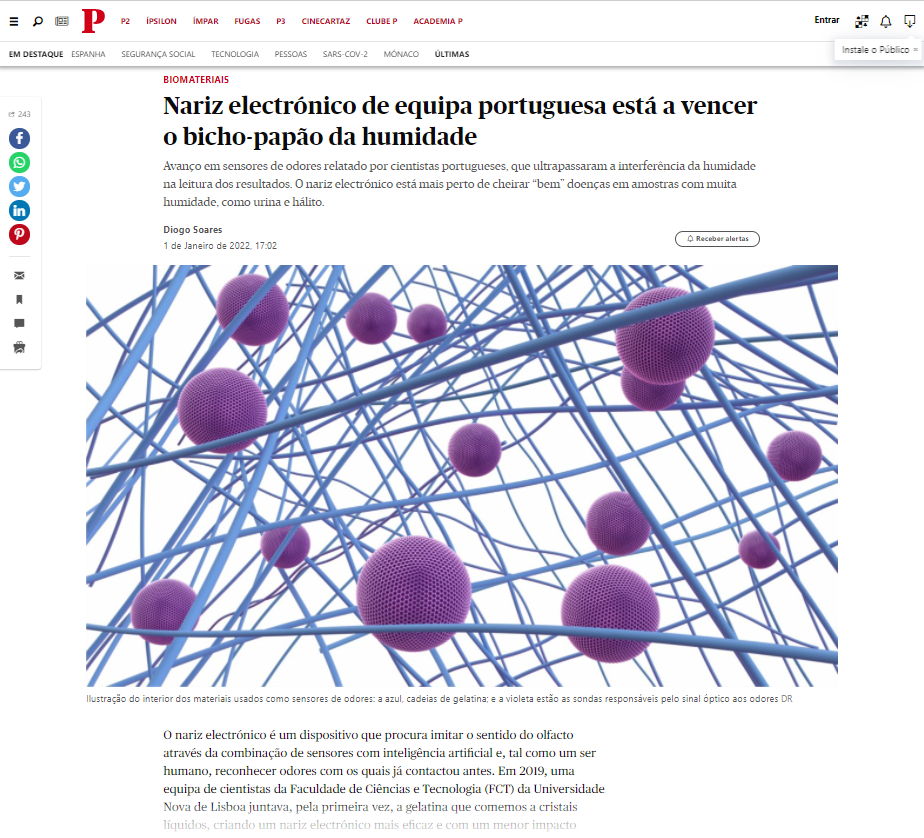
Researchers from the Biomolecular Engineering Lab at UCIBIO-NOVA discovered how to control gelatin's affinity for water, giving rise to new materials that can detect odors in humid or dry environments. The study was coordinated by Cecília Roque, leader of the Biomolecular Engineering Lab, and the results were published in the journal Advanced Materials: “Tackling Humidity with Designer Ionic Liquid-Based Gas Sensing Soft Materials”.
Gelatin is widely known as a culinary ingredient, dissolved in water. However, this ingredient can have other applications. “When we dissolve gelatin in other liquids, it turns into a new material that can either attract or ignore water, and that can be used as an odour sensor in electronic noses”, explain the authors of the paper. The novelty that surprised the authors was the transformation of these gelatin-based materials into sensors that work both in humid environments (such as urine or breath) and in dry environments, through the simple exchange of a single component. As if only one ingredient was changed in the recipe, and with this change, the gelatin behaved in the opposite way regarding humidity.
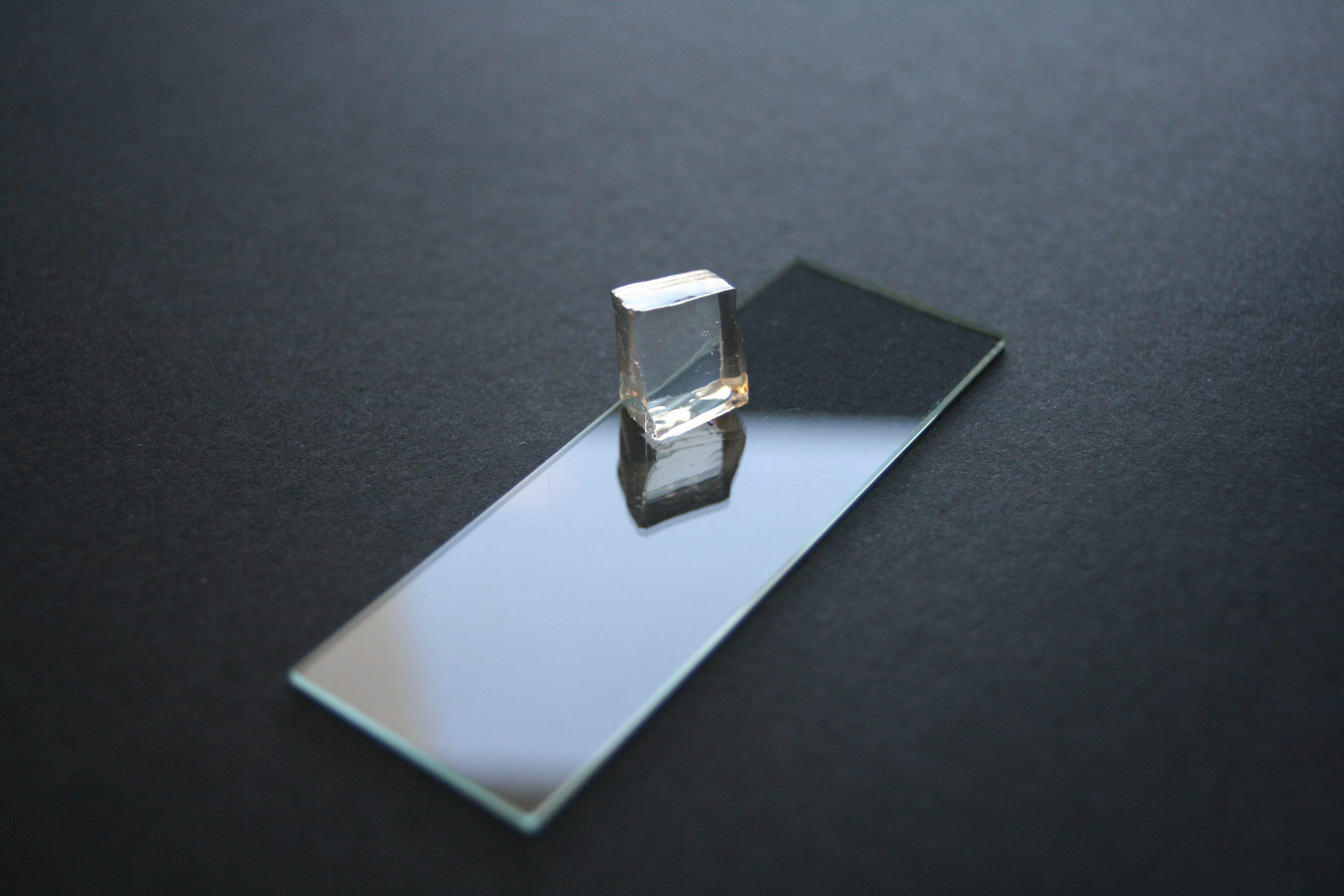
Gelatin gel used in the manufacture of sensors.
With this finding, the researchers solve an old problem of artificial olfaction, the interference of humidity, which until now, has prevented the wide use of electronic noses in clinical diagnostics.
The use of electronic noses in clinical diagnostics is based on the collection of non-invasive human samples, such as urine and breath, which are then “smelled”, like Hipocrates did, to indicate in a very fast way the disease status of the person.
Due to the high humidity content of human samples, the electronic nose sensors struggle to detect the odour’s volatile compounds that indicate disease, as they are masked by the humidity signal. “With this new finding from our research team, it is possible to design and model gelatin-based materials to smell samples in environments with distinct humidity levels”, concludes the team leader, Cecília Roque.
The authors from the paper published in the scientific journal Advanced Materials explain how the new materials work and how they can be used to detect odours with excellent performance both in humid and dry environments.
Article:
Tackling Humidity with Designer Ionic Liquid-Based Gas Sensing Soft Materials
Carina Esteves*, Susana I. C. J. Palma*, Henrique M. A. Costa*, Cláudia Alves, Gonçalo M. C. Santos, Efthymia Ramou, Ana Luísa Carvalho, Vitor Alves, Ana C. A. Roque
Advanced Materials: https://doi.org/10.1002/adma.202107205
*First authors
In the news:
“Nariz electrónico de equipa portuguesa está a vencer o bicho-papão da humidade”, Público 2022-01-01